


Industrial mechanical operation relies heavily on core structural components, and most equipment failures do not appear suddenly on the surface. They originate from unreasonable material selection, inaccurate forging precision, and unstandardized internal tissue structure of key stressed parts. Many engineering teams only focus on appearance size and immediate installation effects, ignoring long-term fatigue resistance, high-temperature deformation resistance and corrosion matching performance of parts, which eventually lead to frequent shutdown maintenance, shortened equipment service life and uncontrollable production safety risks. Choosing qualified and professionally customized high-precision alloy forged parts can fundamentally avoid these hidden troubles that are easy to be overlooked in daily use.
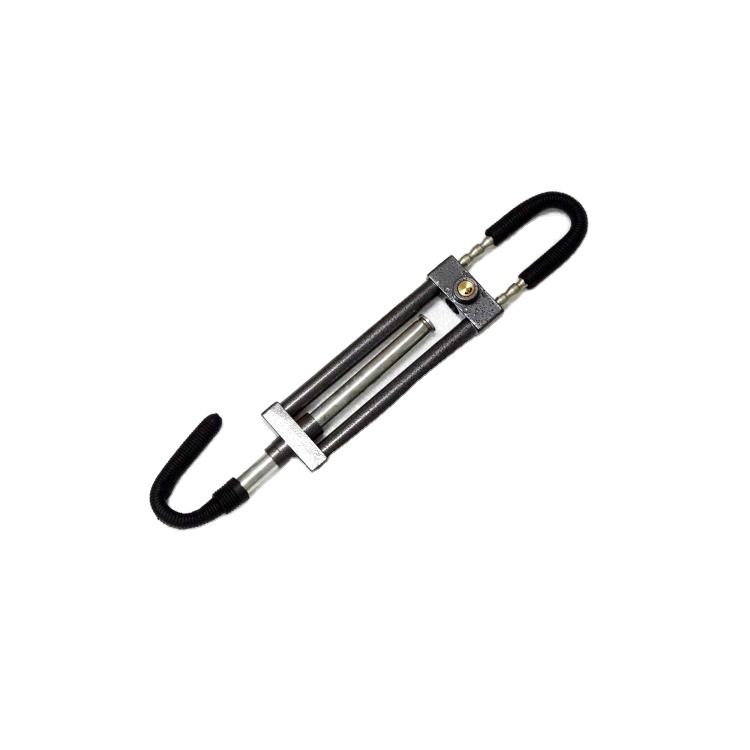
A large number of on-site maintenance data show that ordinary cast parts and low-grade stamped parts are prone to internal pores, loose structure and uneven stress distribution during operation. Under continuous high load, vibration and alternating impact, micro cracks expand rapidly, causing part fracture, loose assembly and abnormal wear of the whole machine. Unlike ordinary processing technology, professional alloy forging process optimizes metal fiber structure through high-temperature pressure shaping, makes the internal density of parts significantly improved, and greatly enhances comprehensive mechanical properties that ordinary processes cannot achieve. Reliable component suppliers from Hengda Precision Manufacturing strictly control the whole process from raw material smelting, hot forging forming to precision finish machining, ensuring each finished product meets harsh industrial working condition standards.
Users often misunderstand that all forged parts have the same quality and performance. In fact, alloy material ratio, forging temperature control, heat treatment process and post-processing accuracy directly determine the actual service cycle of parts. Working environments such as high temperature, low temperature, strong corrosion, heavy impact and continuous rotation have completely different requirements for alloy formula. Blindly using universal standard parts will cause premature aging, poor sealing performance and mismatched fit clearance, increasing unnecessary replacement costs and production interruption losses. Deep understanding of working condition characteristics and customized matching of forged alloys is the core logic to reduce later failure rate.
Common pain points encountered by purchasers include unclear parameter indicators, inconsistent tolerance standards between domestic and foreign equipment, difficulty in verifying actual fatigue resistance, and unclear after-sales quality assurance scope. Many products on the market only mark simple size parameters, but lack test data of tensile strength, impact toughness, hardness uniformity and wear resistance. Once installed on large mechanical equipment, tiny precision errors will be amplified layer by layer, affecting the stability of the entire transmission system and hydraulic system. Systematic parameter matching and authoritative performance testing can effectively avoid mismatching risks caused by blind purchasing.
Long-term stable operation of mechanical equipment cannot be separated from matching coordination between shaft parts, connection parts, stressed structural parts and supporting accessories. Alloy forged parts undertake core torque transmission, load bearing and safety protection functions, and their structural strength directly affects the operation safety of the entire production line. Improper part quality will not only increase maintenance labor costs, but also cause potential safety hazards such as equipment collapse and mechanical accident. Reasonable selection of professional forged alloy components can optimize overall equipment matching, reduce comprehensive operation cost and improve continuous and stable production capacity.
Core Performance Comparison Of Alloy Forged Parts & Traditional Process Parts
| Performance Index | High-Quality Alloy Forged Parts | Ordinary Cast Parts | Common Stamped Parts |
|---|---|---|---|
| Internal Metal Structure | Dense fiber arrangement, no pores or looseness | Easy to have internal holes and loose structure | Disordered fiber, poor stress bearing |
| Fatigue Resistance | Ultra-high cycle impact resistance, long service life | Easy to crack under repeated load | Deform rapidly under continuous vibration |
| High Temperature Adaptability | Stable performance at 450℃ and above | Softened and deformed easily at medium temperature | Serious thermal deformation |
| Assembly Fit Precision | Ultra-small tolerance, seamless matching | Large dimensional error, loose assembly | Unstable size, easy wear gap |
| Corrosion & Wear Resistance | Strong anti-oxidation and anti-corrosion ability | Poor surface wear resistance | Weak corrosion resistance in humid environment |
Hidden problems that are easily ignored by most users include residual stress inside parts after processing. Unreasonable forging and heat treatment will leave invisible internal stress. During long-term operation, stress release will cause part deformation, precision drift and installation position deviation. Professional precision alloy forging products adopt stress relief aging treatment, which eliminates internal hidden dangers from the source, maintains stable size accuracy for years, and adapts to 24-hour uninterrupted high-intensity industrial production.
In heavy machinery, mining equipment, power machinery and petrochemical supporting fields, working conditions are harsh and variable. Humid corrosive atmosphere, frequent heavy impact load and extreme temperature difference environment put extremely strict requirements on material comprehensive performance. Low-cost inferior parts seem economical in short purchase price, but frequent replacement, shutdown maintenance and accidental failure losses far exceed the cost difference of high-quality parts. Cost-effective customized alloy forged parts achieve balanced advantages in initial investment and later operation cost.
Another deep-seated demand easily overlooked by customers is customized non-standard size processing. Standard universal parts cannot adapt to special equipment transformation, old equipment upgrading and special interface mechanical matching. Mass customized production with drawing processing ability can perfectly fit special shaft diameter, special connection structure and special stress requirements, avoiding secondary processing damage and precision loss of parts. Integrated production from forging blank to finished precision processing greatly improves overall product consistency and interchangeability.
In actual industrial application, equipment operation noise, abnormal temperature rise and abnormal vibration are early warning signals of inferior forged parts. Users often attribute these phenomena to equipment aging, ignoring the quality defects of core stressed components. High-standard alloy forged parts have uniform stress bearing, stable power transmission and low operation noise, which can reduce mechanical wear of matching accessories at the same time, extend the service life of bearings, gears and connectors, and further reduce overall enterprise maintenance expenditure.
To sum up, selecting suitable alloy forging components is not only a simple procurement behavior, but a key link related to equipment safety, production efficiency and comprehensive operation benefit. Mastering material characteristics, process advantages, working condition matching logic and hidden failure prevention knowledge can help enterprises avoid unnecessary risks, reduce comprehensive production costs and obtain more stable long-term industrial operation benefits. Professional customized high-precision alloy forged components always maintain stable and reliable performance in various complex harsh industrial environments.